
01
Where it started: Uganda
Everything I do today started in Uganda. At Light Secondary School in Bushenyi I took my O- and A-Levels in Physics, Economics, Mathematics and ICT, received an award for academic excellence in 2019, and served as the school's Information Minister.
Before university I taught. As a junior tutor at Kiyanga Vocational School in Mitooma, I taught physics and mathematics with a focus on environmental STEM, organised internships and introduced a system for managing academic data. Teaching showed me early that explaining something clearly is half of the work.
I then studied civil engineering at Ndejje University, with a focus on infrastructure development and environmental protection, and worked as an intern junior civil engineer at Pro Industries in Luwero. That was where sustainability stopped being an abstract idea for me: it is decided in roads, structures and materials, and in whether a community can afford and maintain what gets built.
02
Germany: engineering meets systems
In October 2024 I moved to Germany to study Sustainable Civil Engineering at Technische Hochschule Ingolstadt (THI), on the Neuburg an der Donau campus, and in 2025 I was awarded a Malengo scholarship, a programme that supports international students in Germany.
The technical side was sustainable construction, circularity, BIM and structural design, with tools such as AutoCAD, Revit, ArchiCAD, Civil 3D and GIS, and frameworks such as Cradle to Cradle, Level(s) and the EU Taxonomy. Just as important was learning how sustainability is organised: how universities, NGOs, research networks and public bodies actually run climate work.
In 2025 my fellow students elected me to the student council at the Neuburg campus. With the highest vote total, I also took a seat on the Faculty Council. Representation teaches you what participation really involves: agendas, competing interests, compromise, and reporting back to the people who chose you. I also took part in BauFaK, the national conference of civil-engineering student representatives, working on recommendations for bringing sustainability into the curriculum.
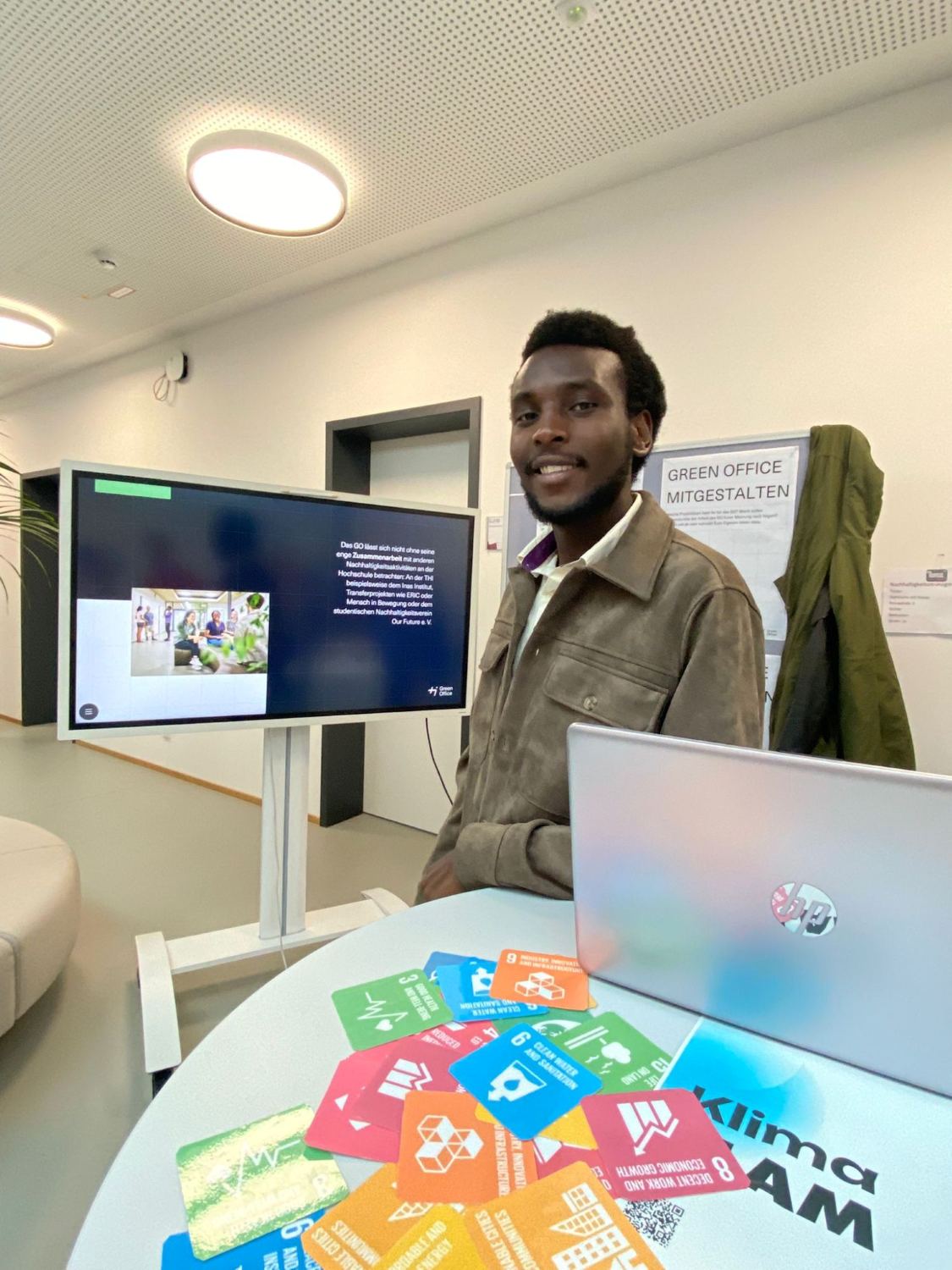
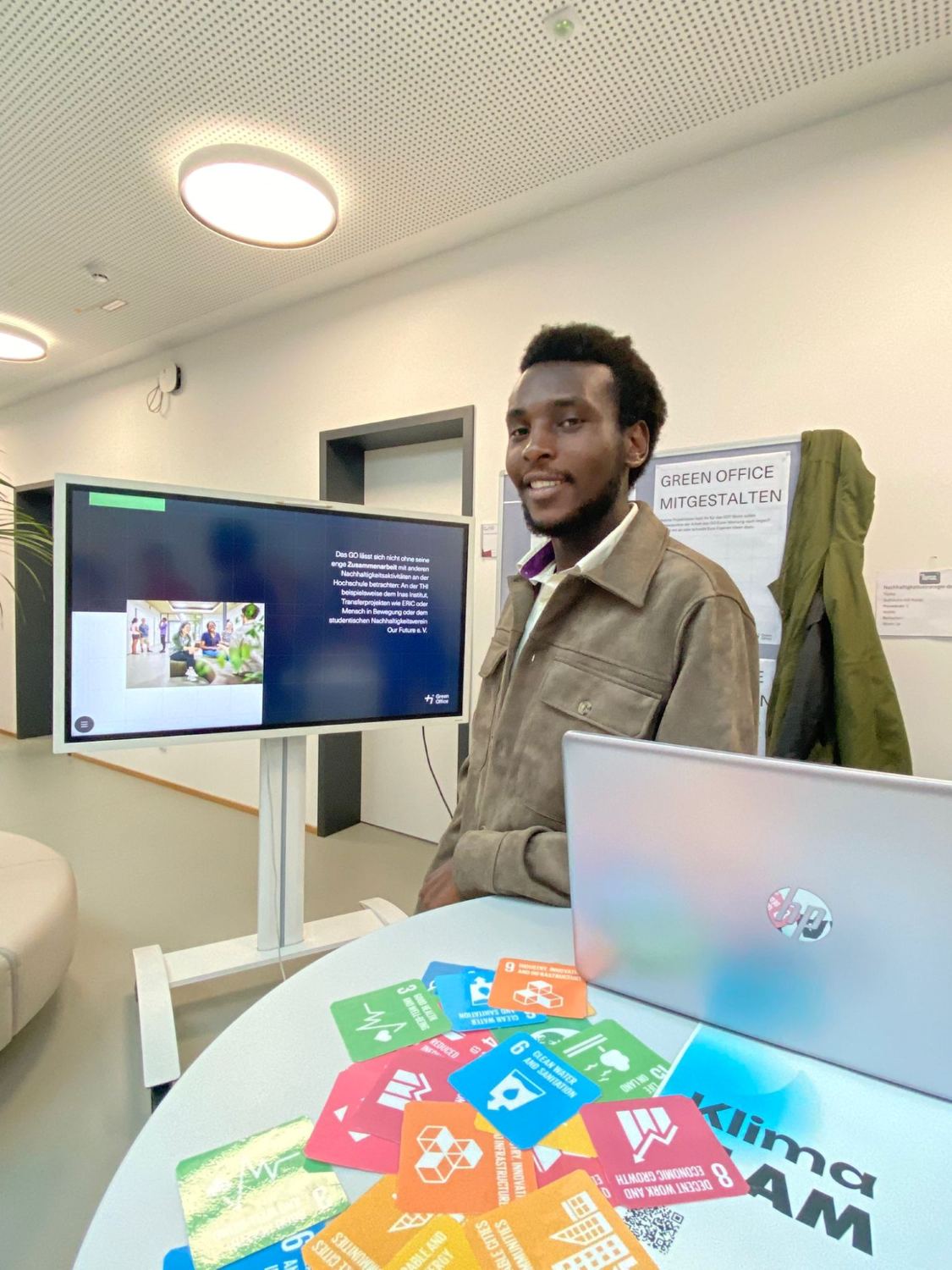
As a volunteer with THI's Green Office, I helped give sustainability a home on campus. In May 2026 I officially opened the new Green Office together with fellow volunteer Viktoriya Syedyenkova and THI Vice President Prof. Dr.-Ing. Elke Feifel.
03
Research that has to work in practice
Construction is where climate policy becomes physical. A large share of a building's climate impact comes from its materials, especially cement, long before anyone moves in. That embodied carbon is the focus of my research.
Since December 2024 I've been a research associate at the Albert-Hofmann-Institut, working across Germany and Uganda on alternatives to conventional cement and on regenerative agriculture. I led the design of a multi-country research proposal, from survey instruments and interview guides to timelines and ethics documentation, and organised workshops on climate justice, indigenous knowledge and policy. Research coordination is the work of turning a good idea into something that can be funded and delivered.
Since November 2025 I've been a working-group member in two European COST Actions: CA24110 (ReInvent), on renewable bio-based materials from global biomass, and CA23113 (CliMent), on climate change impacts on mental health in Europe. As a student member of RIBA Europe's Sustainability & Net Zero group, I work with architects too, because sustainable construction can't be solved by engineers alone.
I write about this for wider audiences: an article on taking sustainable construction from innovation to implementation (Vector Press, 2026), and one on what traditional Igbo architecture can teach us. I'm also one of the acknowledged contributors (feedback and suggestions, not co-authorship) to J. D. Rolfes' manuscript Open In-House Crowd Review, published by Vector Press in 2026.
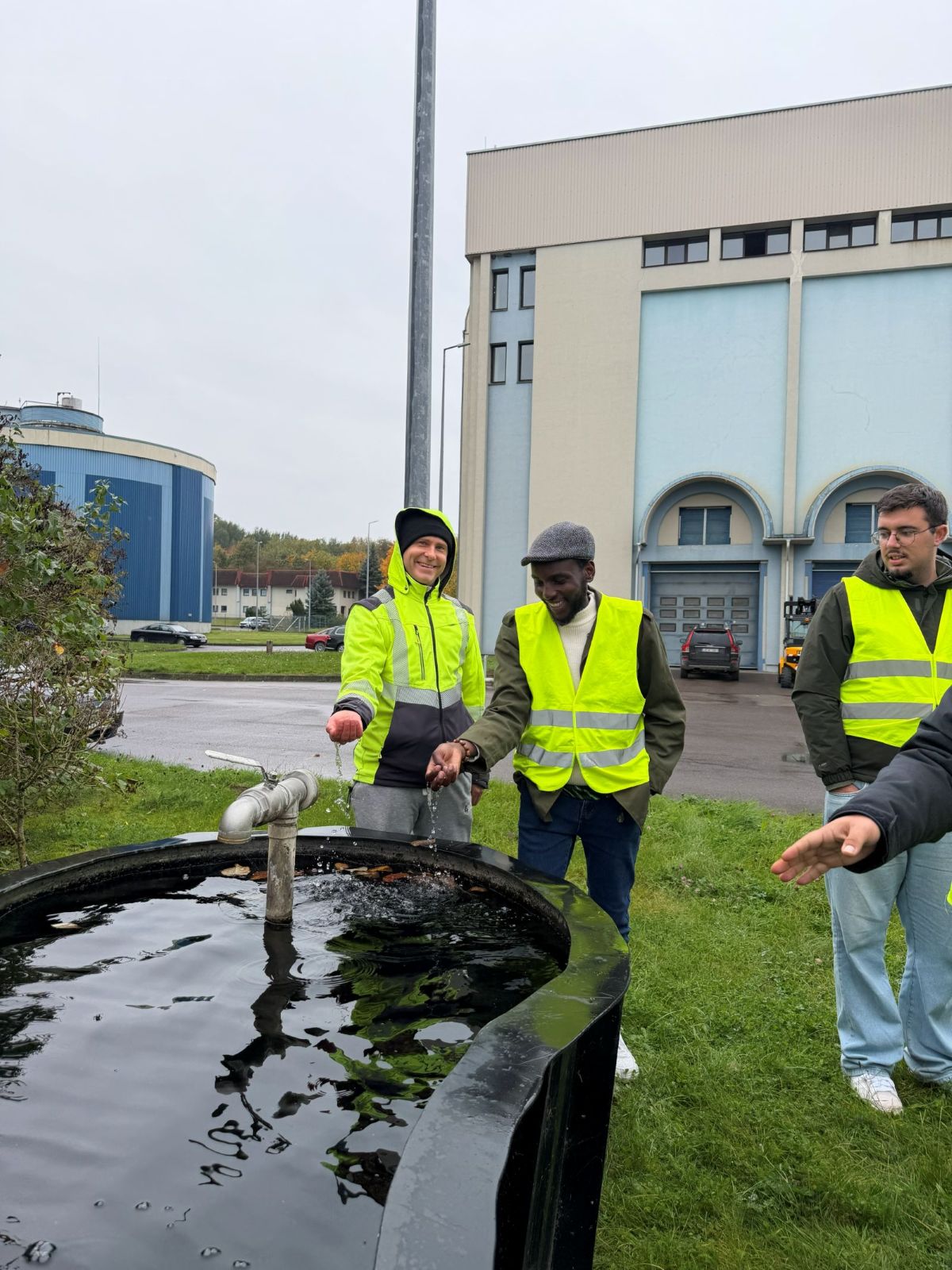
My conclusion so far: most of the solutions already exist. The hard part is moving them from pilot projects into everyday construction.
04
Building the Rolfes SDG Academy
In July 2025 I co-founded the Rolfes SDG Academy, and I chair its Executive Board. It's a youth-led organisation that takes education on the Sustainable Development Goals beyond awareness, toward critical thinking, leadership and joint action.
We run global cohorts, expert lecture series, policy dialogues and youth debate platforms. Most of my work happens behind the scenes: finding speakers, scheduling across time zones, keeping participants on board and building partnerships with universities and non-profits.
The core principle is exchange between the Global North and South. Someone who has lived through drought and someone who first studied it at university hold different kinds of knowledge, and neither ranks above the other. Young people shouldn't only be invited to listen; they should help shape the table.
The same idea runs through my other youth work. On the ACE²-EU exchange in Santarém, Portugal, I designed and coordinated the “Rural Skills Bridge”, an EU pilot for young people in remote rural communities. I was selected for Cohort 4 of the Aspire Leaders Program (Aspire Institute, affiliated with Harvard University) and, in 2026, for Eco Champions, a multi-country community of young changemakers.
05
Service: from desk research to a charity run
Some of my service is analytical, some of it is out on the street. I value both, because development work needs people who can handle evidence and people who can bring others along.
As an online volunteer with UN Volunteers, I supported UNDP Liberia's World Environment Day campaign on plastic waste in June 2025. Since July 2025 I've worked with UNDP Switzerland on the project “Breaking the vicious cycle: underdevelopment and malaria”, researching tools that address malaria-critical SDG indicators, for a toolbox that helps district-level decision-makers.
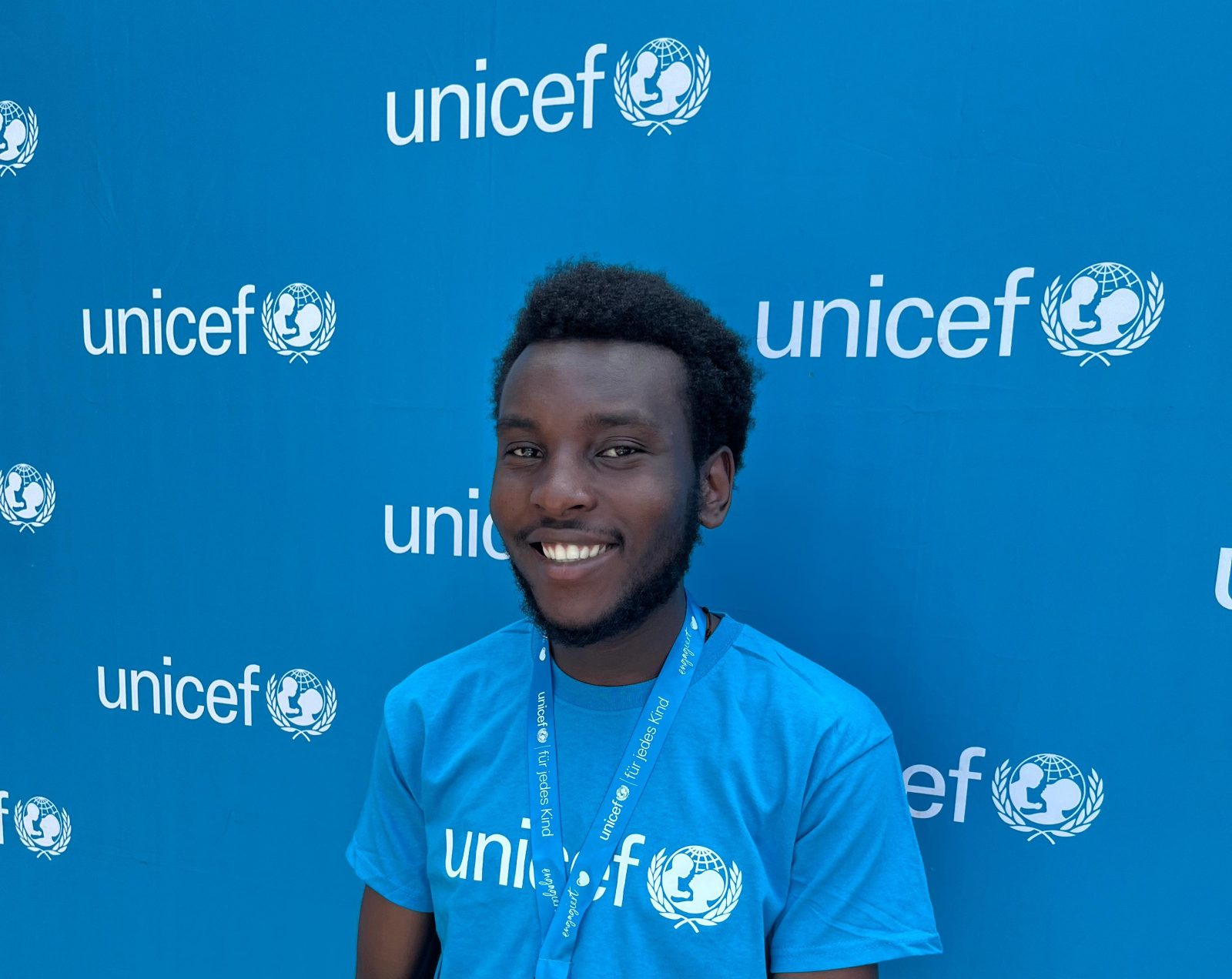
In Ingolstadt I volunteer with UNICEF Deutschland. I coordinated the children's charity run for children's education and took part in the HSG UNICEF Summit in Freiburg. At Bio Div e.V. I'm a project coordinator: I designed and lead the initiative “Empowering International Students”, run environmental workshops for young people, and in October 2025 helped organise an autumn clean-up on the THI campus with OurFuture e.V. With Akademie Deutschland I draft grant applications for education and climate-justice projects.
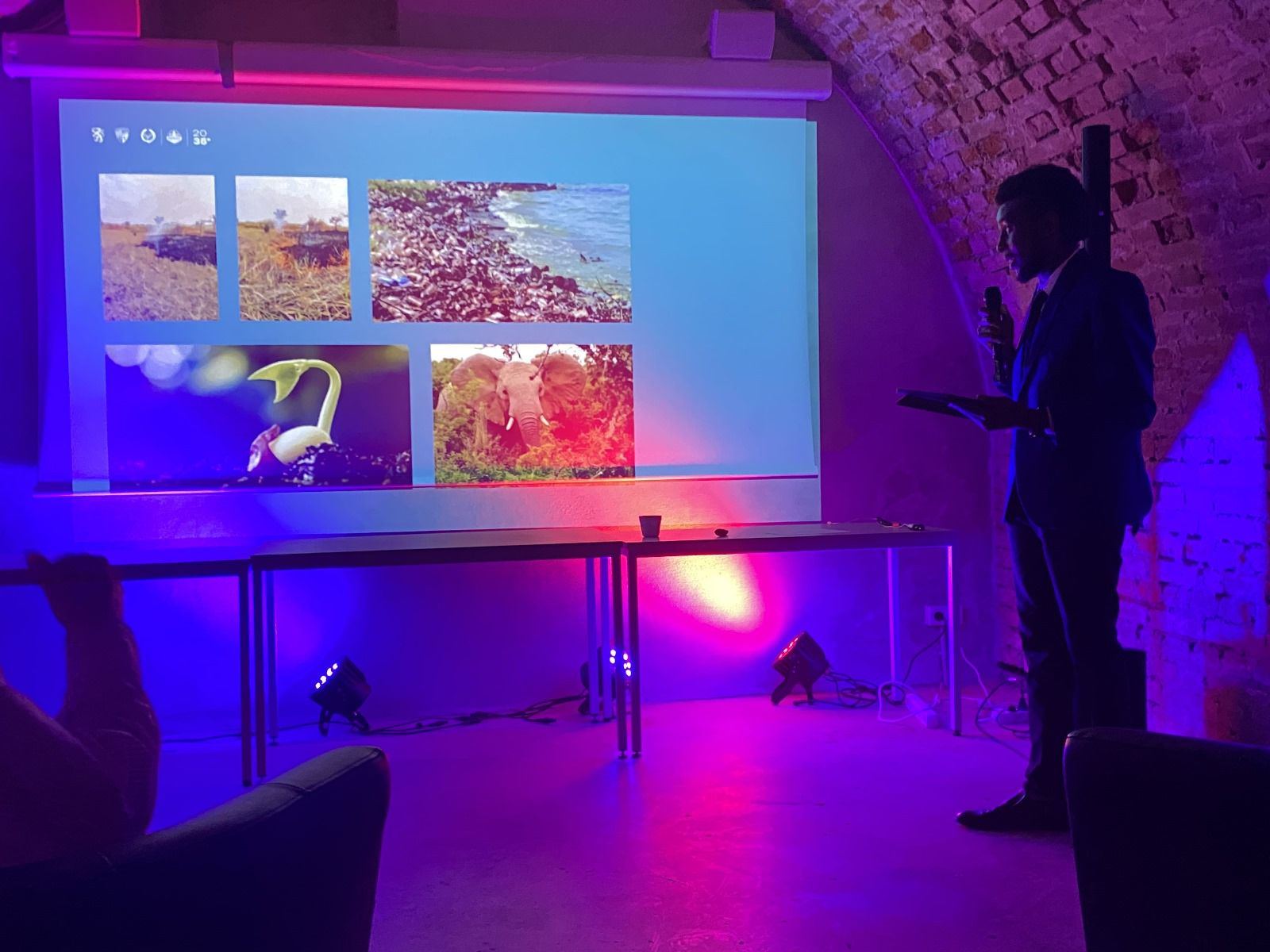
In April 2025 I was a moderator at a global recruitment workshop for the Global Citizens' Assembly, run by the ISWE Foundation and Participedia, and presented a three-phase hybrid model for fair citizen selection to more than 100 policymakers and researchers.
06
When evidence isn't enough: poetry
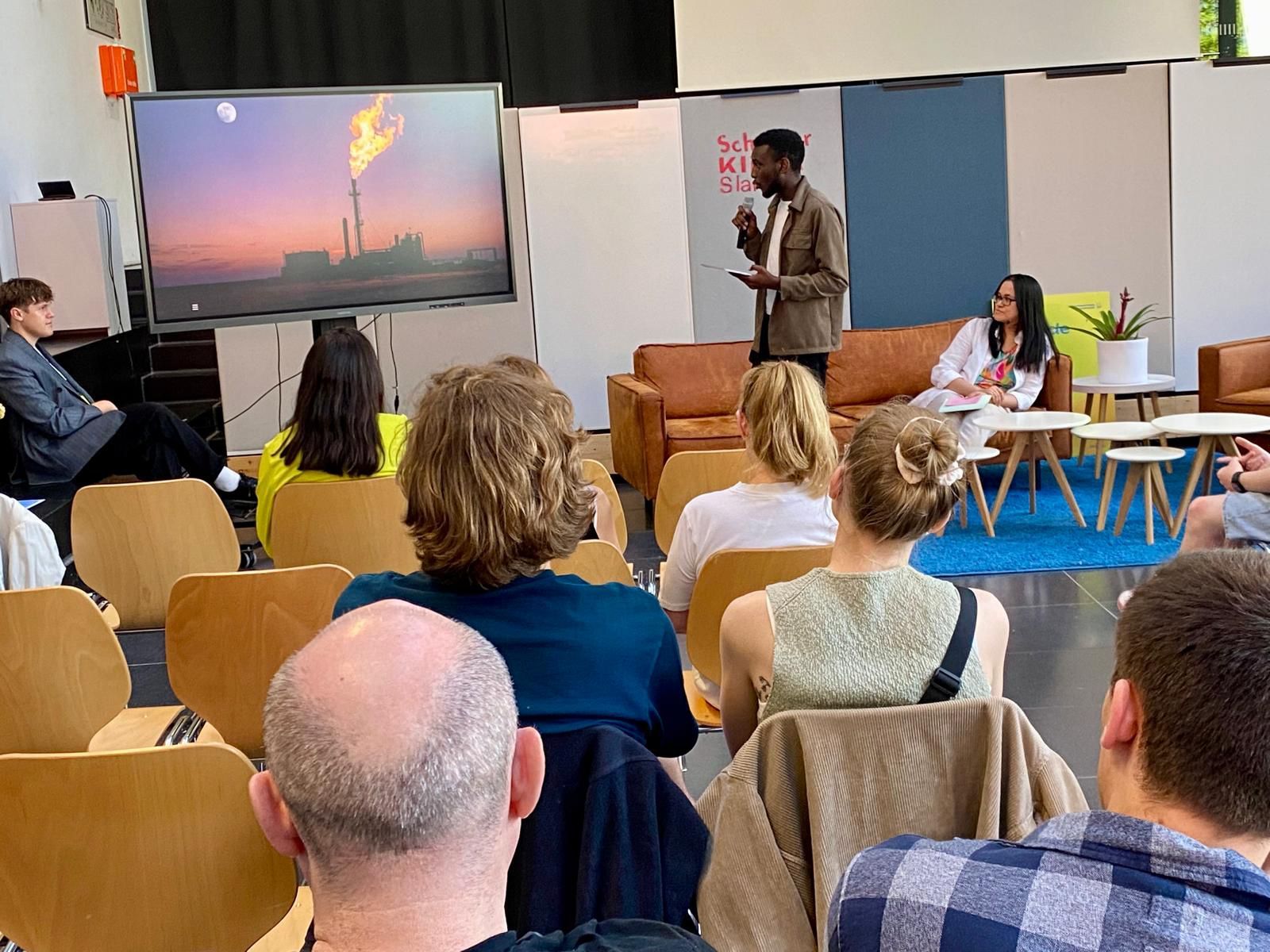
Evidence alone rarely moves people. On 22 May 2025 I performed my poem “The Earth's Humming” at the Schanzer Klima-Slam in Ingolstadt, organised by Our Future e.V. with the City of Ingolstadt. The audience voted it the evening's favourite.
On 22 May 2026, in the Neue Aula at THI, I came back as the previous year's winner and defended the title with “The Shadow of Black Gold”, a spoken-word poem about oil extraction in Uganda and a schoolboy waiting for light. I've also performed in intercultural settings, including the ACE²-EU Kaleidoscope Culture Festival at THI with a piece about Ingolstadt and its history.
For me, poetry isn't a side hobby next to engineering. Scientists, policymakers, students and the public each need a different way in. A poem can carry urgency that a technical report can't, and a technical report can carry precision that a poem can't. I want to be able to do both.
07
Exchange, not transfer, and what's next
Living between Uganda and Germany has shaped one conviction more than any other: climate solutions shouldn't simply be handed from one region to another. They should be exchanged.
The usual picture is that Europe has the expertise and Africa receives it. But a young person who lives with drought or unreliable infrastructure holds practical knowledge that is often missing from well-resourced policy rooms. Materials like bamboo and earth are too often dismissed as “low-tech”. Vernacular systems aren't automatically sustainable, and modern technologies aren't automatically inappropriate. The useful question is how both can be evaluated rigorously and combined.
That's also how I like to work: as a connector between institutions and regions, a builder of programmes that keep running after the event ends, and a translator between engineering, policy, education and public language.
What I'm looking for next: a role in research or project coordination in sustainable construction or climate education, and invitations to speak, on closing the implementation gap in low-carbon construction, on Africa–Europe knowledge exchange, on youth participation, and on climate in verse.